London neighbourhood guide
Mayfair
Mayfair makes central London feel easy, especially if you value polished hotels, fine dining and quieter streets. You’ll pay for that convenience, and you may miss a more independent local scene.
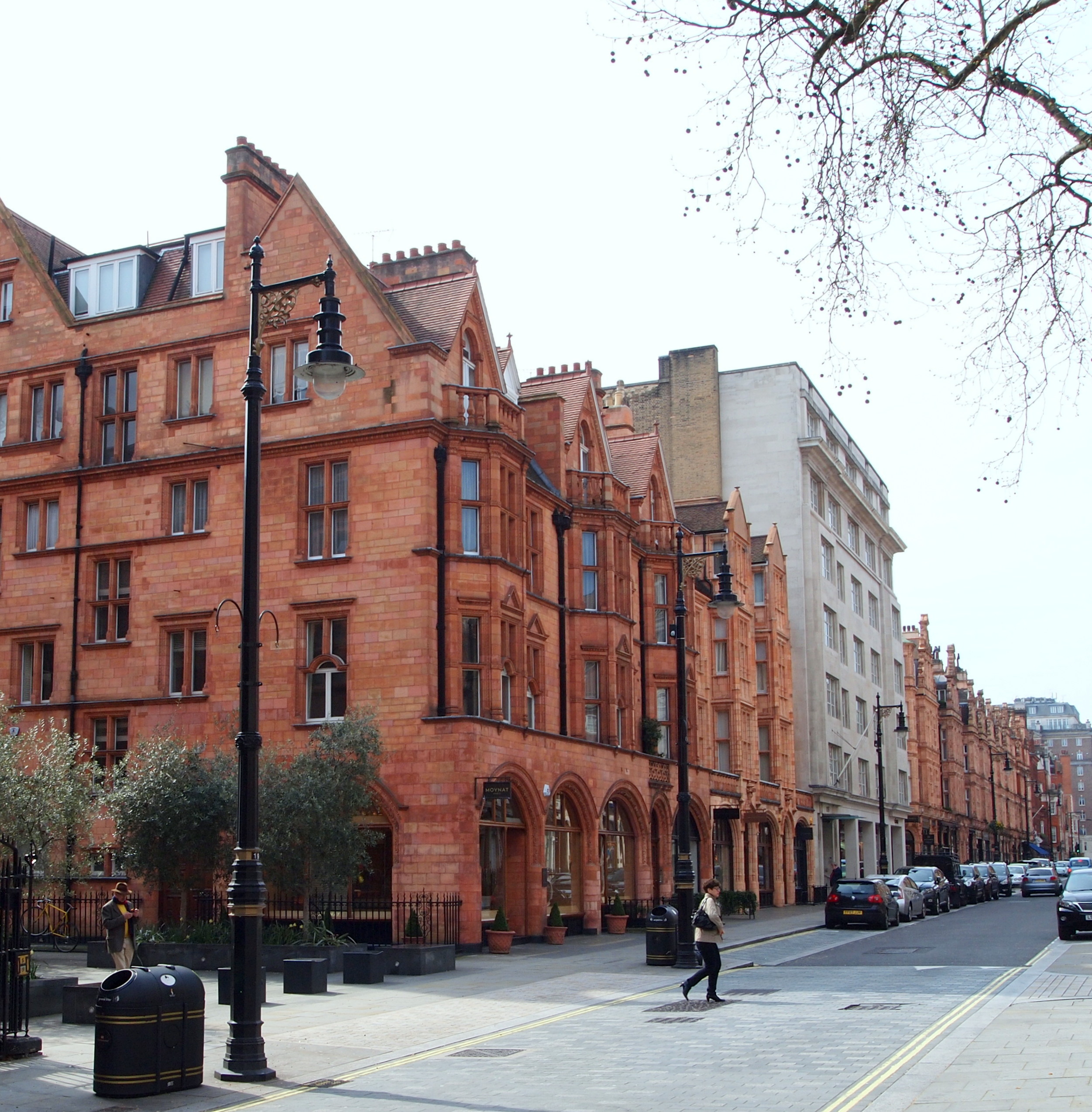

Best for
- Visitors who want premium hotels, service and predictable quality.
- Travellers who value exceptional centrality and easy outward walking.
- People drawn to fine dining, luxury retail and discreet surroundings.
- Visitors who prefer polish and convenience to creative intensity.
What you might find frustrating
- Wanting stronger local personality or independent culture around the hotel.
- Finding the area too formal or controlled for the London experience you wanted.
- Spending most evenings elsewhere because you wanted more nightlife or spontaneity.
- Prioritising premium surroundings when atmosphere mattered more.
Orientation
Where it sits in your London day
Mayfair is an effortlessness-first base: a polished central neighbourhood whose main advantage is making the rest of London easier to use, rather than providing constant local discovery of its own.
- Transport
- Many useful central destinations sit within an easy walk, so Mayfair often reduces the number of transport decisions you need to make.
- Walking
- Walking is comfortable and central, but usually more about effortless access and elegant streets than continual discovery.
- Sleep
- Internal and western streets can be notably calm, while Bond Street, Oxford Street and the eastern edges bring more visitor, traffic and late-evening activity.
Who it suits best
Mayfair is strongest for visitors who want London to feel easy. The hotels are polished, the streets are central, high-end restaurants and shops are close at hand, and much of the West End, Hyde Park, Marylebone and Westminster can be reached without turning every journey into a transport decision. The point isn’t simply that Mayfair is luxurious. Its real advantage is that a well-serviced base can remove friction from the rest of the trip.
It works especially well for travellers who value premium service, discretion, refined surroundings and predictable quality, and who see the hotel itself as an important part of the experience. For the right visitor, Mayfair is less about filling the day locally and more about making everything around it easier.
Why you might prefer somewhere else
Mayfair is a weaker fit if you want the neighbourhood itself to provide constant discovery, creative energy, independent culture or informal nightlife. You can find beautiful streets, historic pubs and smaller-scale corners here, but much of the area is built around established luxury, business, hospitality and private institutions rather than grassroots experimentation.
The predictable regret is paying for polish when what you really wanted was personality. If your ideal evenings involve wandering between independent bars, discovering unexpected restaurants or feeling that the street outside the hotel is one of the main reasons you chose the area, Soho, Fitzrovia, Chelsea or another more character-led base may suit you better.
Day-to-day rhythm
Mornings tend to feel calm and orderly as hotels, cafés and offices come to life. By afternoon, Bond Street becomes much more visibly shopping-led and international, while quieter streets around Mount Street, Berkeley Square and the western interior remain comparatively composed. The contrast is one of Mayfair’s defining features: activity is concentrated rather than spread evenly across the neighbourhood.
Evenings are driven more by restaurants, hotel bars and polished hospitality than by nightlife spilling into the streets. Late at night, many internal streets quieten noticeably, although the eastern and south-eastern edges can pick up West End theatre traffic and congestion.
Getting around
Mayfair’s greatest practical strength is how little thought you often need to give transport. Soho, Hyde Park, Marylebone, Westminster and large parts of the West End sit naturally around it, while Covent Garden and Kensington remain straightforward to reach. The value isn’t just access to stations; it’s the number of useful places you can walk to before needing one.
That makes Mayfair an unusually effective launchpad. Many visitors leave in the morning, spend the day elsewhere and return in the evening without feeling that they have chosen an inconvenient base. If you value low-friction central movement, that can matter more than having a neighbourhood packed with attractions of its own.
Walking and everyday convenience
Walking in Mayfair is comfortable, central and polished, but it’s not usually exploratory in the same way as Soho, Notting Hill or South Bank. You’re more likely to be moving through elegant streets towards another part of central London than uncovering a constant sequence of hidden discoveries.
Everyday convenience is strongest when your priorities align with the area’s strengths: high-quality hotels, dining, shopping and easy outward access. If independent cafés, informal local routines or creative street life matter more, the convenience can start to feel efficient rather than personally rewarding.
Noise and sleep
Mayfair can be surprisingly calm for somewhere this central, particularly on internal and western streets away from the busiest retail corridors. Residential blocks, private squares and hotel streets often settle earlier than nearby Soho or Covent Garden.
But the neighbourhood label isn’t enough on its own. Bond Street brings shopping crowds and visitor activity; the Oxford Street fringe adds buses, traffic and mass-market retail; and hotels closer to the eastern or south-eastern edge can pick up late-evening West End traffic. Exact street position matters more than Mayfair’s overall reputation for restraint.
Food, pubs and evenings
Mayfair evenings are strongest for visitors who like dinner, drinks and hospitality to feel polished rather than improvised. Fine dining, hotel bars, established restaurants and sophisticated social spaces do most of the work. The area is sociable, but it rarely produces the same street-level intensity or late-night spillover as Soho or Shoreditch.
Shepherd Market is the useful exception. Its smaller lanes, pubs, cafés and intimate restaurants briefly give Mayfair a more human-scaled, almost village-like feel. It doesn’t redefine the whole neighbourhood, but it’s important because it shows that Mayfair isn’t one continuous corridor of luxury brands and private doors.
Tourist intensity
Mayfair is visitor-facing, but not uniformly so. Bond Street can feel intensely international and shopping-led, especially at busy times and weekends, while quieter streets around Berkeley Square and Mount Street can feel restrained, residential and even slightly formal. Weekdays also bring more business activity, which changes the balance again.
That formality is part of the atmosphere. Around Grosvenor Square and parts of western Mayfair, security measures, private institutions and a controlled public realm can reinforce a sense of order and discretion. Some visitors experience that as reassuring; others may find it emotionally detached.
Longer-stay suitability
Mayfair’s advantages don’t disappear on a longer stay. Centrality, hotel quality and easy access to surrounding neighbourhoods continue to save time and effort day after day, which can make the area exceptionally practical if those are your priorities.
The question is whether that remains enough once the premium environment stops feeling novel. Over a longer stay, visitors who want stronger local routine, more independent places or a neighbourhood they enjoy exploring for its own sake may become more aware of what Mayfair doesn’t provide. Its value holds best when reduced friction remains more important than local texture.
Better alternatives
Kensington & Knightsbridge is the better alternative when museums, parks and a broader cultural setting matter alongside luxury. Marylebone & Fitzrovia is the better alternative when you want a more lived-in central neighbourhood with stronger everyday restaurant and café life. Westminster & St James’s is the better alternative when ceremonial London, historic institutions and national landmarks dominate. Chelsea is the better alternative when you want a premium stay with more intimate streets and a stronger neighbourhood identity.