London neighbourhood guide
Stratford
Stratford works well if transport, shopping, events and the Olympic Park matter more to you than historic London streets. Just remember that the station, Westfield and park cover a bigger area than they might seem on a map.

Best for
- Value exceptional transport and flexible planning.
- Want parks, open space and modern infrastructure.
- Need easy access to events, shopping and East London.
- Prefer a practical base that can support many kinds of trip.
What you might find frustrating
- More historic atmosphere and architectural layering.
- A more intimate, compact neighbourhood feel.
- Shorter local walks between hotel, station and attractions.
Orientation
Where it sits in your London day
Stratford is a capability-first East London base: exceptional transport, major retail, Olympic Park, events and growing cultural infrastructure make many kinds of trip easy, while its large-scale systems and dispersed geography trade neighbourhood intimacy for flexibility.
- Transport
- Exceptional cross-London connectivity, but Stratford Station, Stratford International, Westfield and the Olympic Park are not one compact interchange.
- Walking
- Clear and spacious rather than compact: broad public spaces and large development blocks can make local walks longer than maps suggest.
- Sleep
- Usually less intense than central nightlife districts, but event nights and hotel position relative to stations and venues can change the experience sharply.
Who it suits best
Stratford is strongest for visitors who want a base that can solve a lot of practical problems at once. Transport is exceptional, open space is unusually generous, shopping and everyday services are easy to access, event venues sit close by and the neighbourhood increasingly has a cultural life of its own through East Bank. Its defining strength isn’t romance or historic atmosphere. It’s capability.
That makes Stratford particularly useful for families, business travellers, repeat visitors, event-goers and anyone planning to move widely across London. The trade-off is equally clear: you gain flexibility and infrastructure, but lose some of the intimacy, architectural layering and accidental street-level discovery found in older neighbourhoods.
Why you might prefer somewhere else
Choose somewhere else if you want your immediate surroundings to feel unmistakably historic, compact or characterful from the moment you leave the hotel. Stratford can feel highly functional and recently built, and parts of the area are organised around large pieces of infrastructure rather than a dense network of intimate streets.
The main predictable regret isn’t that Stratford is inconvenient. It’s almost the opposite: you may realise that you chose a base that does many things efficiently when what you really wanted was a neighbourhood whose streets, pubs, architecture and small-scale routines became part of the emotional memory of the trip.
Day-to-day rhythm
Mornings are heavily shaped by commuters and transport users around Stratford Station. By afternoon, shoppers, office workers, park visitors, families and cultural visitors create a much more mixed population. Evenings vary more than the generic “relaxed contemporary” label suggests because event schedules can suddenly become the dominant force.
On ordinary days, the area feels active but spacious. On event days, football, concerts, athletics or major performances can produce sudden surges of people moving towards stations, venues and Westfield. Stratford therefore rewards visitors who like a capable environment but are willing to check what is happening locally before assuming every evening will feel the same.
Getting around
This is one of Stratford’s strongest arguments. The Elizabeth line, Underground, DLR, Overground and National Rail make it unusually easy to build an ambitious London itinerary from here. Stratford International, a separate station, also serves domestic high-speed trains; Eurostar doesn’t stop there. The area also naturally opens up East London, Canary Wharf and central London rather than forcing every day into one direction.
But excellent network connectivity should not be confused with frictionless local movement. Stratford Station and Stratford International are distinct arrival environments, and the distance between a platform, Westfield, a hotel and the Olympic Park can involve more walking than the transport map suggests. Stratford is easy to navigate conceptually; it’s not especially compact physically.
Walking and everyday convenience
Stratford works through large systems rather than a single traditional high street. Westfield is central to that. It’s not merely somewhere to shop: for many visitors it becomes part transport concourse, part pedestrian bridge, part dining district, part orientation device and part bad-weather shelter.
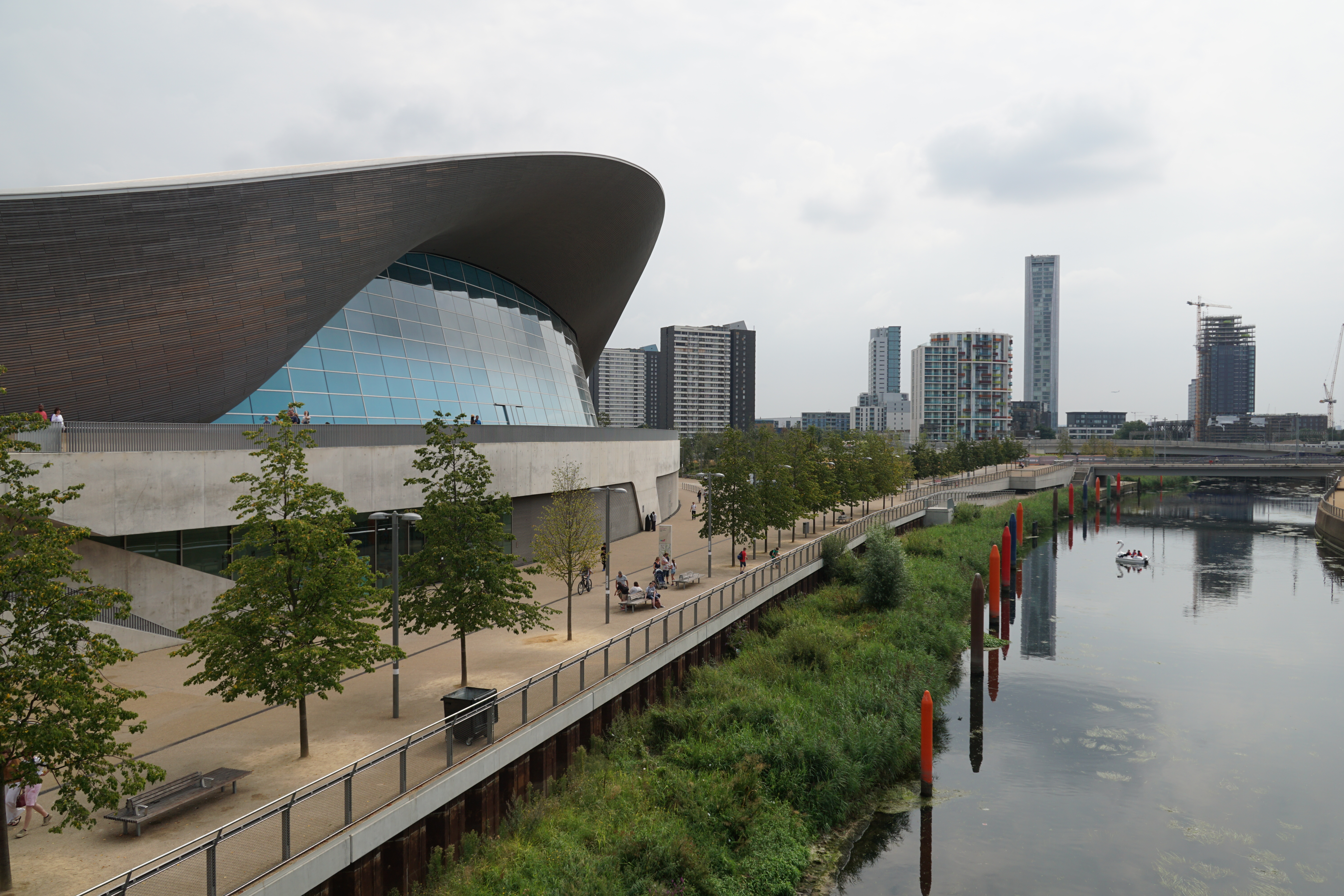
Beyond the retail core, the neighbourhood becomes much more open. The Olympic Park offers green space, waterside routes and room to walk without the compressed feeling of central London. That spaciousness is a genuine advantage, especially on longer stays, but it also means apparently short journeys can stretch across broad plazas, parkland and large development blocks.
Noise and sleep
Stratford is generally less acoustically intense than Soho, Camden or Shoreditch, but hotel experience depends heavily on exact location and the event calendar. A room close to major pedestrian routes, transport infrastructure or event flows can feel very different from one facing quieter residential or park-side surroundings.
Event nights are the main variable to check. A hotel that feels calm on an ordinary weekday can experience a noticeable increase in crowd movement, transport noise and late departures after a match, concert or performance. The key question is therefore not simply whether Stratford is “quiet”, but whether your hotel sits in the path of the systems that make Stratford useful.
Food, pubs and evenings
Evening life is contemporary and practical rather than destination-led. Westfield, East Bank and the newer mixed-use areas provide restaurants, bars and dependable options, while Stratford Old Town retains more traditional East End pubs and local streets. The range is useful, but Stratford isn’t one of London’s strongest neighbourhoods for independent food culture or nightlife intensity.
The result is an easy base for visitors who want dinner and a drink without planning the whole evening around their neighbourhood. If you want every night to spill naturally into bars, music venues or dense independent restaurant streets, Shoreditch, Soho or parts of London Bridge will usually provide a more immersive evening environment.
Tourist intensity
Stratford isn’t primarily a tourist district. Its crowds are a changing mix of commuters, shoppers, residents, families, business travellers, park users, culture visitors and event attendees. That distinction matters because the area can be extremely busy without feeling like classic sightseeing London.
Weekdays lean more heavily towards commuting, business travel and shopping. Weekends bring more families, leisure visitors and event-goers. The neighbourhood therefore changes by population rather than simply by becoming “more touristy” or “less touristy”.
Longer-stay suitability
Stratford can work very well for longer stays when flexibility matters. Transport keeps the whole city accessible, the Olympic Park gives you genuine breathing room, Westfield makes everyday errands straightforward and East Bank adds cultural depth that the older transport-and-shopping stereotype misses.
The trade-off becomes clearer over time too. If you value local intimacy, historic streets or a strong small-scale neighbourhood identity, the infrastructure-led character may begin to feel impersonal. Stratford works best when you value what the neighbourhood enables more than the romance of simply being in it.
Better alternatives
Canary Wharf is the stronger alternative when you want contemporary elegance, waterfront living and a more controlled, coherent urban environment. King’s Cross & St Pancras works better when you want similarly powerful transport with more historic layering and central urban reinvention. Paddington & Bayswater is stronger when practical centrality and established connections matter more than large-scale regeneration. Greenwich is the better fit when heritage, atmosphere and destination identity matter more than infrastructure and flexibility.