London neighbourhood guide
King’s Cross & St Pancras
King’s Cross is hard to beat for train connections. You’ll also find restaurants and canalside spots nearby, although the roads around the stations can feel hectic.
Best for
- Eurostar, National Rail and ambitious cross-London itineraries.
- Visitors who value mobility as much as neighbourhood atmosphere.
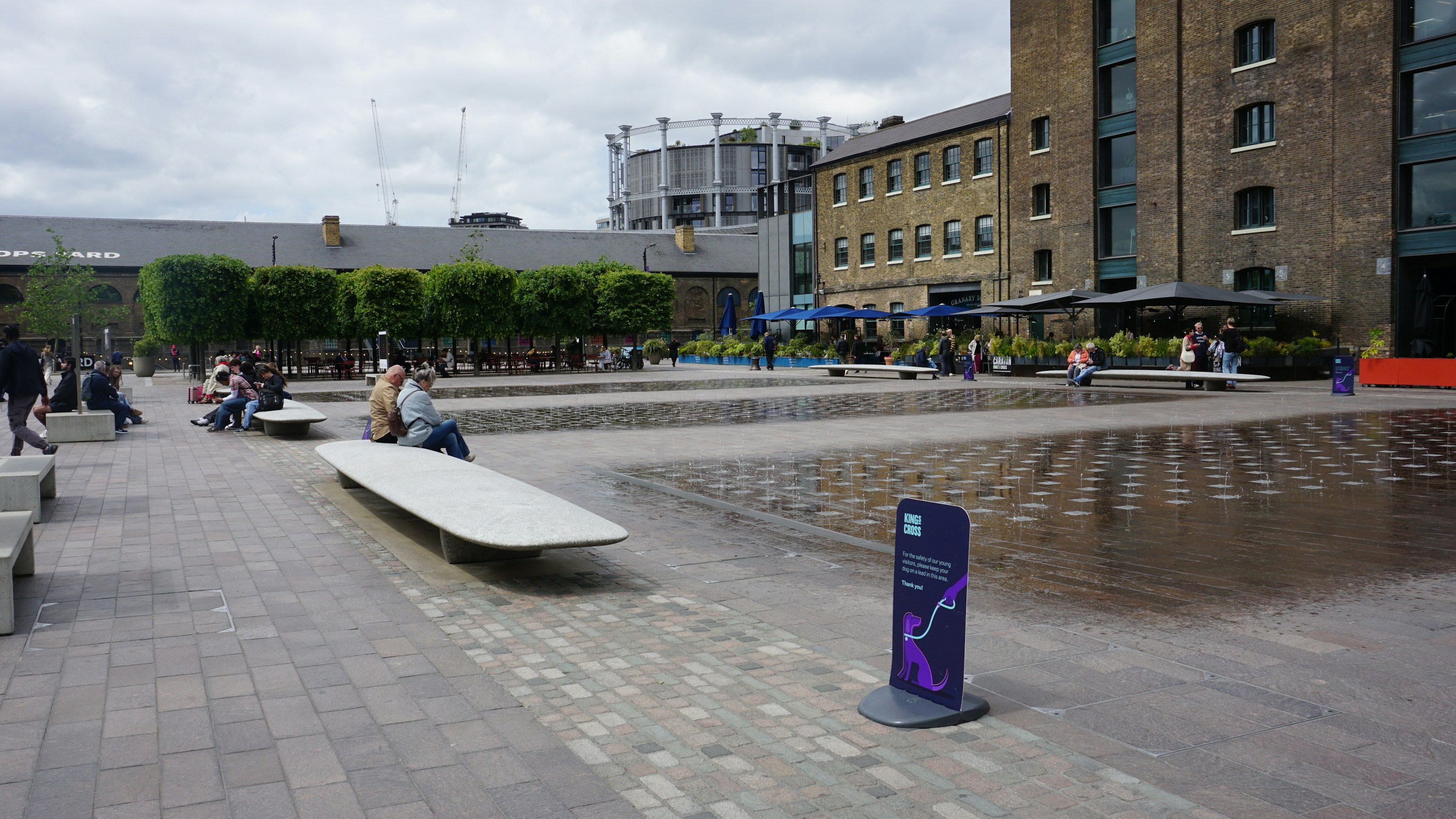
- Contemporary architecture, regeneration and modern public space.
- Canal walks and modern cultural institutions between bigger plans.
What you might find frustrating
- Wanting small-scale residential calm and traditional London charm.
- Assuming every King’s Cross hotel sits beside Granary Square.
- Underestimating station scale, Euston Road and terminal friction.
- Choosing transport convenience without liking modern urban environments.
Orientation
Where it sits in your London day
King’s Cross & St Pancras is a mobility-first base where national, international and Underground connections meet a regenerated canalside district. The key practical distinction is between the polished northern public realm and the busier traditional station approaches.
- Transport
- Exceptional. Underground, National Rail and international rail make this one of London’s strongest movement hubs, although large stations and terminal procedures create their own friction.
- Walking
- Highly variable: station approaches are busy and road-heavy, while the regenerated north and Regent’s Canal provide much better pedestrian space and traffic-free movement.
- Sleep
- Micro-location matters. Euston Road and station approaches stay active late, while parts of the regenerated northern district become noticeably calmer.
Who it suits best
King’s Cross & St Pancras works best when easy movement is part of what makes the trip work. If you’re arriving by Eurostar or National Rail, leaving early, making day trips or expecting to cross London repeatedly, few bases remove as much transport friction from the stay.
It’s more than a station district, though. Visitors who like contemporary architecture, ambitious regeneration, canalside public space and modern cultural institutions can find plenty to enjoy locally. The strongest fit is someone who values both mobility and a distinctly modern side of London rather than needing their hotel street to deliver postcard charm.
Why you might prefer somewhere else
The trade-off is mobility in exchange for intimacy. The stations are enormous, pedestrian movement is constant and parts of the area feel engineered around transport rather than everyday neighbourhood life. If you want quiet residential streets, traditional London atmosphere or the sense of returning each evening to a small-scale neighbourhood, another base may fit better.
The biggest avoidable mistake is assuming every hotel sold as “King’s Cross” gives you the polished Granary Square and Coal Drops Yard experience. A room south of Euston Road can open onto traffic, hostels and busy station approaches, while accommodation north of the stations can feel much closer to the regenerated canalside district.
Day-to-day rhythm
Mornings are purposeful. Commuters, travellers and luggage dominate the station environment, and the area feels fast-moving from early in the day. By afternoon, the regenerated northern side becomes more leisurely as Granary Square, Coal Drops Yard and nearby restaurants fill with office workers, visitors and people spending time locally.
The Knowledge Quarter adds a different daytime rhythm around libraries, museums and research institutions. In the evening, restaurants and bars keep the regenerated areas active while transport movement continues around the stations. Later still, the canal-side spaces quieten much more than the station approaches.
Getting around
This is one of London’s most powerful transport bases. King’s Cross and St Pancras combine Underground, National Rail and international rail connections in one place, making ambitious itineraries unusually easy to organise. Camden, Bloomsbury, the West End and destinations far beyond London can all fit naturally into the same trip.
But a transport hub has its own friction. The stations are large, crossings around Euston Road can be slow, and a journey that looks short on a map may still involve long concourses, busy junctions or security procedures. Staying beside the station reduces the journey to the terminal; it doesn’t make the terminal itself small or effortless.
Walking and everyday convenience
Walking improves dramatically once you move away from the busiest station frontage. North of the stations, Granary Square and Coal Drops Yard provide broad pedestrian spaces, restaurants, seating and a canalside environment that feels intentionally designed for lingering rather than simply passing through.
The Regent’s Canal is especially useful because it’s not just scenery. The towpath creates a traffic-free route towards Camden and onward connections, giving walkers and cyclists a way to move through north-central London without repeatedly returning to major roads. South of Euston Road, the environment becomes more conventional and traffic-heavy, so the exact hotel position changes how pleasant everyday walking feels.
Noise and sleep
Noise is highly location-dependent. Station approaches, Euston Road and streets with heavy visitor turnover can stay active late, with traffic, luggage and arrivals continuing well beyond the normal office day. A hotel chosen purely for station proximity may therefore trade convenience for a busier immediate environment.
The regenerated northern district can feel calmer later in the evening, particularly away from restaurant clusters and major routes. Exact street and room orientation matter more than a general King’s Cross label, especially if sleep quality is a priority.
Food, pubs and evenings
King’s Cross has become a genuine evening destination, but its identity is contemporary rather than traditional. Granary Square, Coal Drops Yard and nearby streets concentrate restaurants, bars and modern public spaces in a way that can make staying locally feel easy after a long sightseeing day.
It’s not a nightlife district in the Soho sense. The appeal is dinner, drinks and sociable public space rather than clubs or constant late-night intensity. South of the stations, the offer becomes more functional and transient, which is another reason exact location matters.
Tourist intensity
Visitor numbers are high around both stations, but much of that activity is movement rather than sightseeing. People arrive, depart, transfer, meet and continue elsewhere, so the busiest spaces can feel transient even when they are full.
The regenerated north has a more mixed identity, with residents, office workers, diners and visitors sharing the same spaces. The Knowledge Quarter adds students, researchers and cultural visitors to the mix. This is therefore a busy district, but not one whose entire atmosphere is generated by tourism.
Longer-stay suitability
For a longer stay, King’s Cross & St Pancras works best when its transport and local variety remain useful after the novelty of the regeneration wears off. Easy cross-London journeys, the canal, modern public space and nearby cultural institutions give you several different ways to use the neighbourhood between bigger plans.
The trade-off becomes clearer too. If what you want from a longer stay is residential calm, small independent streets or a strong sense of traditional London continuity, the scale and movement can feel impersonal. If you value flexibility and like modern urban environments, the same infrastructure can make a longer trip unusually easy to manage.
Better alternatives
Bloomsbury is stronger when cultural depth, historic atmosphere and calmer streets matter more than transport power. Paddington & Bayswater is the better fit when straightforward logistics and relative simplicity matter more than architectural regeneration. The City suits visitors who want a stronger historic-commercial identity and grander architectural contrast. Shoreditch & Spitalfields makes more sense when creativity, independent culture and a less organised urban feel matter more than mobility and polished regeneration.