London neighbourhood guide
Camden
Camden puts markets, live music and busy streets at the centre of the stay. It can be exciting from the moment you step outside, but the crowds and late-night noise that make it worth visiting can also make it tiring to sleep here every night.
Best for
- Visitors who want high energy around the hotel, not just on the itinerary.
- Live music, markets and alternative culture.
- Spontaneous exploration and changing street scenes.
- Repeat visitors seeking a distinctive side of London.
What you might find frustrating
- Wanting the hotel area to feel like a quiet retreat.
- Booking beside a pub, club or live-music venue without checking noise.
- Underestimating weekend crowds and pedestrian congestion.
- Assuming a daytime visit predicts the overnight experience.
Orientation
Where it sits in your London day
Camden is an energy-first base where markets, music and street life create constant stimulation. The High Street and market core are the most intense; canal-side routes and residential backstreets offer useful relief without removing you from the neighbourhood.
- Transport
- Strong for north-central London, with the Northern line and useful walking links; heavy weekend crowds can make Camden Town station and the High Street slower than the map suggests.
- Walking
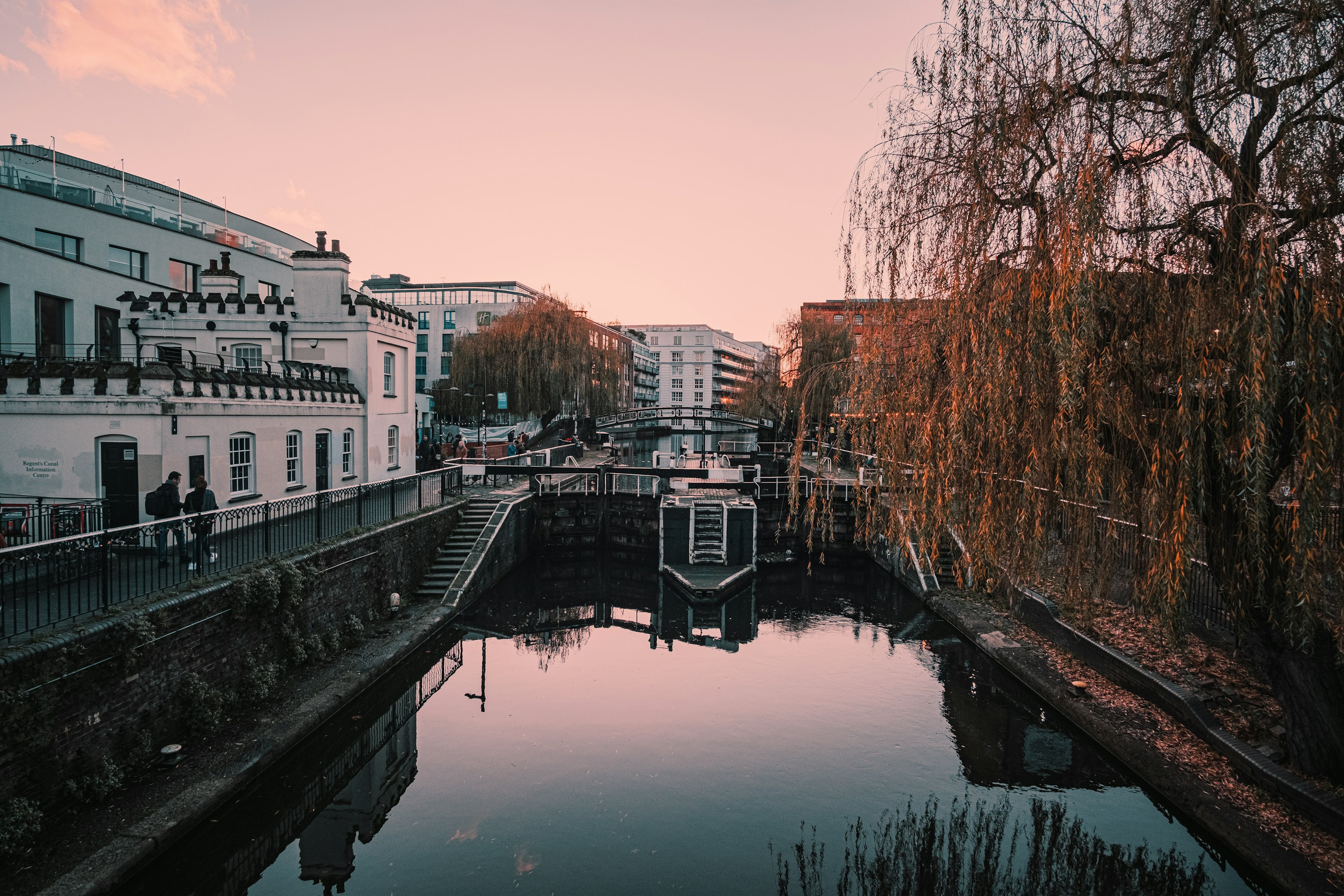
- Highly walkable but time-sensitive: the High Street can be congested, while Regent’s Canal provides a calmer traffic-free route towards Regent’s Park, Primrose Hill and King’s Cross.
- Sleep
- Highly micro-location dependent. Venue-adjacent rooms and High Street locations can be noisy late, while quieter backstreets and some canal-adjacent positions offer more recovery.
Who it suits best
Camden works best when you want the neighbourhood itself to supply energy, surprise and activity throughout the day. Markets, live music, street food, independent businesses and a strong alternative identity make it one of London’s clearest choices for visitors who would rather step into stimulation than return to a polished retreat.
It’s especially well suited to repeat visitors, music-focused trips and spontaneous explorers who enjoy changing street scenes and imperfect urban texture. The key is wanting Camden around your hotel as well as on your itinerary: this isn’t merely somewhere lively to visit for a few hours.
Why you might prefer somewhere else
The central trade-off is energy in exchange for comfort. The same crowds, music, markets and late-night activity that make Camden memorable can also make it tiring, noisy and unpredictable. If you want your accommodation area to provide calm, elegance or a reliable reset at the end of the day, another neighbourhood may fit better.
The most avoidable mistake is assuming that enjoying Camden in the afternoon means you’ll enjoy sleeping there every night. A room above or beside a pub, club, live-music venue or late-night restaurant can produce a very different experience from a quieter backstreet or canal-adjacent hotel only a short walk away.
Day-to-day rhythm
Camden changes dramatically as the day progresses. Morning is comparatively calm while cafés, markets and local businesses open. By afternoon, Camden Town and the market area reach their highest intensity, with street food, shopping, performers and visitor traffic dominating the public realm.
Evening doesn’t bring a full reset. Restaurants, pubs and music venues keep the area active, and by late evening live music, bars and nightlife become a stronger part of the immediate environment. Weekends intensify this pattern further: pedestrian movement slows, queues grow and the difference between a manageable weekday and a busy Saturday can be substantial.
Getting around
Camden is easy to explore locally on foot, and the Northern line gives useful direct access towards both the West End and the City. The wider advantage isn’t just Underground connectivity: the Regent’s Canal towpath also gives you a traffic-free walking route towards Regent’s Park, Primrose Hill and King’s Cross.
Crowds can create their own transport friction. Around the busiest weekend periods, Camden Town station may operate entry restrictions, and short-looking walks along the High Street can take longer than expected. Depending on where you’re staying and where you’re heading, Chalk Farm or Mornington Crescent can sometimes be more practical alternatives.
Walking and everyday convenience
Walking is central to the Camden experience because the streets themselves are part of what you came for. South Camden and the High Street offer maximum visual intensity, markets and visitor activity; farther north towards Chalk Farm, the Roundhouse and Hawley Wharf, the neighbourhood becomes more canal-side, music-led and comparatively polished.
Intensity falls away again along Regent’s Canal and into residential backstreets. That variation matters when choosing accommodation. If you want easy access to Camden’s energy without living at its maximum setting, the closest possible hotel to the market or High Street isn’t automatically the best choice.
Noise and sleep
Sleep is one of Camden’s most location-sensitive trade-offs. High Street and venue-adjacent accommodation can be affected by late-night crowds, music and bass vibration, while pubs, clubs and restaurants at ground-floor level may matter more than the neighbourhood label itself.
Quieter backstreets and some canal-adjacent locations can offer a more manageable return at night without removing you from Camden altogether. Check the exact building, what sits directly below or beside it, and whether the room faces the street before assuming that all Camden stays carry the same acoustic risk.
Food, pubs and evenings
Camden’s evening identity is a continuation of its daytime personality rather than a separate nightlife district layered on top. Live music is central, pubs and bars remain busy, and the street environment keeps moving after many market stalls and daytime attractions have wound down.
The northern side around Chalk Farm and the Roundhouse can feel different from the High Street core, with more venue-led activity and a slightly less market-dominated atmosphere. If your preferred evening is a quiet dinner followed by an early retreat, remember that the neighbourhood may continue long after you’re ready to stop.
Tourist intensity
Camden is heavily visitor-facing, especially around the markets and High Street, but calling it simply touristy misses an important part of the picture. Its alternative identity has become one of London’s best-known attractions, so genuine music and countercultural roots now sit alongside commercialised versions of the same image.
That means Camden can feel authentic and performative at the same time. The crowds are real, the branding is real and the tourist economy is substantial, but so are the music venues, alternative retail and creative culture that made the area distinctive in the first place.
Longer-stay suitability
A longer Camden stay can work very well if the energy is something you actively want to return to. There’s enough local activity to make repeat evenings easy, and the canal, Regent’s Park and Primrose Hill provide useful ways to lower the intensity without leaving north London altogether.
The same qualities can also compound in the wrong micro-location. Repeated crowds, late-night noise and constant stimulation are more noticeable over several nights than during one afternoon visit. For a longer stay, access to quieter streets or the canal becomes more valuable because it gives you a reliable way to step out of Camden’s highest-intensity mode.
Better alternatives
Shoreditch & Spitalfields is stronger when you want contemporary creativity, food culture and East London experimentation rather than Camden’s market-and-music identity. King’s Cross & St Pancras is better when connectivity, regeneration and a more organised urban environment matter more than creative intensity. Soho makes more sense when centrality, restaurant density and West End energy dominate. Notting Hill is the better choice when you want residential charm, slower exploration and atmosphere without Camden’s level of sensory intensity.