London neighbourhood guide
Notting Hill
In Notting Hill, cafés, market stalls and residential streets can be part of the holiday rather than just the way back to your hotel. It’s less handy if you plan to spend every day sightseeing in the West End.
Best for
- Visitors who want the neighbourhood around the hotel to become part of the holiday.
- Travellers who enjoy cafés, markets, architecture and slower wandering.
- Couples, repeat visitors and longer stays that benefit from local routine.
- Visitors who value neighbourhood personality more than maximum sightseeing efficiency.
What you might find frustrating
- Wanting major central sights to be easier to reach on foot.
- Expecting every street to match the postcard version of Notting Hill.
- Choosing a hotel without checking its distance from the station, Portobello Road or the Westway.
- Wanting stronger nightlife or more constant evening activity.
Orientation
Where it sits in your London day
Notting Hill is a neighbourhood-first base where cafés, markets, residential streets and local atmosphere matter enough to justify giving up some West End sightseeing efficiency.
- Transport
- Well connected, especially around Notting Hill Gate, but many sightseeing days still involve repeated Tube journeys and station walks that add up over a stay.
- Walking
- Excellent for slow local wandering, but hills and the distance between some accommodation and stations can make short-looking routes more demanding with luggage or a pushchair.
- Sleep
- Often calm on residential streets, but Portobello activity, commercial areas and the northern Westway edge can create materially different noise and evening conditions.
Who it suits best
Notting Hill is strongest for visitors who want the neighbourhood around the hotel to become part of the holiday itself. Attractive residential streets, independent cafés, shops, markets and local dining give you reasons to stay nearby rather than treating the area as somewhere you only leave from and return to.
It suits travellers who enjoy slower wandering, architecture, photography and spending an unplanned hour close to their accommodation. Couples, repeat visitors and longer stays are especially natural fits, but it can also work on a first trip if you’re comfortable trading some sightseeing efficiency for a more distinctive base.
The neighbourhood works best when staying here is part of what you came to London for. If you would happily spend a morning walking local streets, stopping for coffee and letting the area itself provide the experience, Notting Hill makes much more sense than if every day begins with a rush towards the headline sights.
Why you might prefer somewhere else
Notting Hill is a weaker choice when your priority is seeing as much central London as possible with the least effort. Many classic sightseeing days involve repeated Tube journeys, and the time between hotel, station and attraction can add up more than it would from a West End base.
It’s also easy to choose Notting Hill for an image rather than the actual stay. The pastel terraces and Portobello atmosphere are real, but they aren’t every street. Ordinary residential blocks, busy roads and the northern Westway edge are part of the wider recommendation zone too, and two hotels both described as “Notting Hill” can deliver very different versions of the area.
The predictable regret is loving the idea of Notting Hill but wanting more immediate landmarks, stronger nightlife or easier sightseeing once the trip begins.
Day-to-day rhythm
On an ordinary weekday, mornings can feel genuinely neighbourhood-led: local cafés open, commuters move through Notting Hill Gate and residential streets remain relatively calm. By afternoon, Portobello Road, Westbourne Grove and the better-known shopping streets draw more visitors, while side streets still offer quieter pockets only a short walk away.
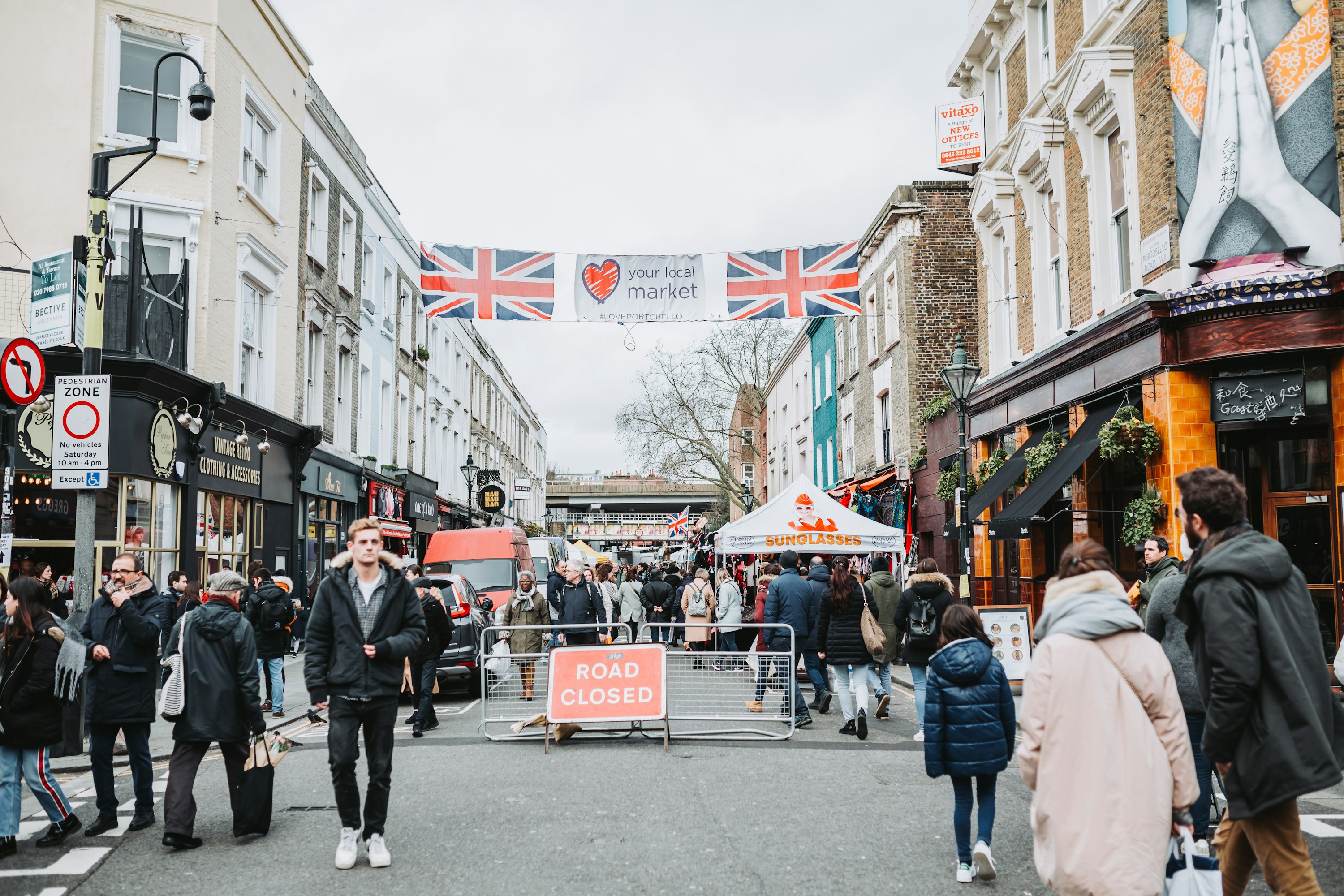
Saturday changes the balance far more dramatically. Portobello Road becomes a major visitor destination, with heavy pedestrian traffic and a much stronger sense that the neighbourhood itself is the day’s attraction. After the market winds down, the same streets briefly become more functional as traders pack up and cleaning, waste collection and servicing take over.
Sunday can feel different again, with a noticeably calmer, more village-like rhythm returning. That variation is part of the appeal, but it means the Notting Hill you experience depends not only on where you stay, but on when you step outside.
Getting around
Notting Hill is well connected, but it’s not the same kind of base as Soho or Covent Garden. You can reach central London easily, yet many sightseeing days still begin with a Tube journey rather than a short walk through the West End.
Notting Hill Gate gives the strongest combination of transport access and neighbourhood identity, while accommodation farther west or north can add a meaningful walk before you even reach the station. That matters more on a short, attraction-heavy trip than on a slower visit where spending time locally is part of the plan.
The cumulative effect is the real trade-off. One extra journey may barely register; making that journey morning and evening across several days is when sightseeing efficiency begins to matter.
Walking and everyday convenience
Walking is one of Notting Hill’s pleasures because the streets themselves are worth paying attention to. The neighbourhood rewards detours, small changes in architecture and stopping for cafés, shops or market activity rather than moving directly from one attraction to another.
The practical side is less uniform. Parts of the area slope more than the map suggests, and a hotel that looks reasonably close to a station can feel less convenient with luggage, a pushchair or limited mobility. The difference between a five-minute and fifteen-minute walk to Notting Hill Gate can materially change how easy the base feels over several days.
Westbourne Grove and the streets around Notting Hill Gate generally provide the strongest everyday convenience, while quieter residential pockets trade some immediacy for atmosphere. That’s not a flaw; it’s a choice about what you want immediately outside the door.
Noise and sleep
Many residential streets become pleasantly quiet at night, which is one of the area’s real strengths compared with livelier central districts. But calm isn’t consistent across the whole zone.
Portobello and nearby market streets can carry more daytime activity, early preparation and later servicing. Commercial streets remain busier around dinner, while accommodation towards the northern Westway transition can face a much more urban mix of road noise and visual intrusion than the postcard image of Notting Hill suggests.
The exact address therefore matters unusually strongly. A peaceful residential street, a room beside Portobello Road and a hotel near the Westway may all share the same neighbourhood label while producing very different nights.
Food, pubs and evenings
Notting Hill’s evenings are led more by dinner, wine bars, pubs and neighbourhood atmosphere than by nightlife. Westbourne Grove and nearby streets can stay lively through restaurants and drinks without developing the late-night intensity of Soho or Shoreditch.
That makes the area attractive if you like the idea of eating locally, having a drink and walking back through quieter streets rather than turning the evening into another major expedition. Residential pockets settle earlier, while the main dining streets retain enough activity to prevent the neighbourhood from feeling shut down.
Visitors seeking clubs, bar-hopping or constant late-night choice will probably find the evening too restrained. Visitors who want sociability without a nightlife-first identity are much more likely to appreciate it.
Tourist intensity
Notting Hill can be both intensely visitor-heavy and distinctly residential, depending on the street and the day. Portobello Road and the most photographed streets can draw large numbers of visitors, especially on Saturdays, while ordinary weekdays and nearby residential streets can feel much more local.
That contrast is important because the neighbourhood isn’t a single continuous tourist zone. You may spend an hour among market crowds and then turn into streets where the dominant activity is residents, cafés and ordinary neighbourhood life.
Season matters too. Warmer months and outdoor café weather make the area feel more outward-facing, while colder periods shift more of the character towards shops, cafés, restaurants and the residential fabric itself.
Longer-stay suitability
Notting Hill often becomes more rewarding over a longer stay because its strengths are repeatable. A favourite café, a familiar stretch of Westbourne Grove, a preferred route through residential streets or an easy local dinner can become more valuable once the first round of sightseeing is over.
The same longer stay also makes transport trade-offs harder to ignore if your itinerary remains heavily centred on the West End or major attractions elsewhere. Repeated station walks and Tube journeys matter more over a week than over a weekend.
That’s why the area works best when you genuinely want to spend time in it. If neighbourhood routine, atmosphere and local wandering sound like part of the London experience you want, Notting Hill can age very well across several days. If the hotel area is mainly a launch point, a more practical base may make more sense.
Better alternatives
Kensington & Knightsbridge is stronger when museums, parks, civic grandeur and a more polished sense of calm matter more than small-scale neighbourhood personality. Chelsea works better when you want refinement, riverside character and a quieter lifestyle-led base. Marylebone & Fitzrovia is stronger when you want attractive streets and restaurants with easier central walking and a more balanced relationship with the West End. Paddington & Bayswater makes more sense when transport convenience and everyday practicality matter more than having a destination neighbourhood outside the hotel.