London neighbourhood guide
Soho
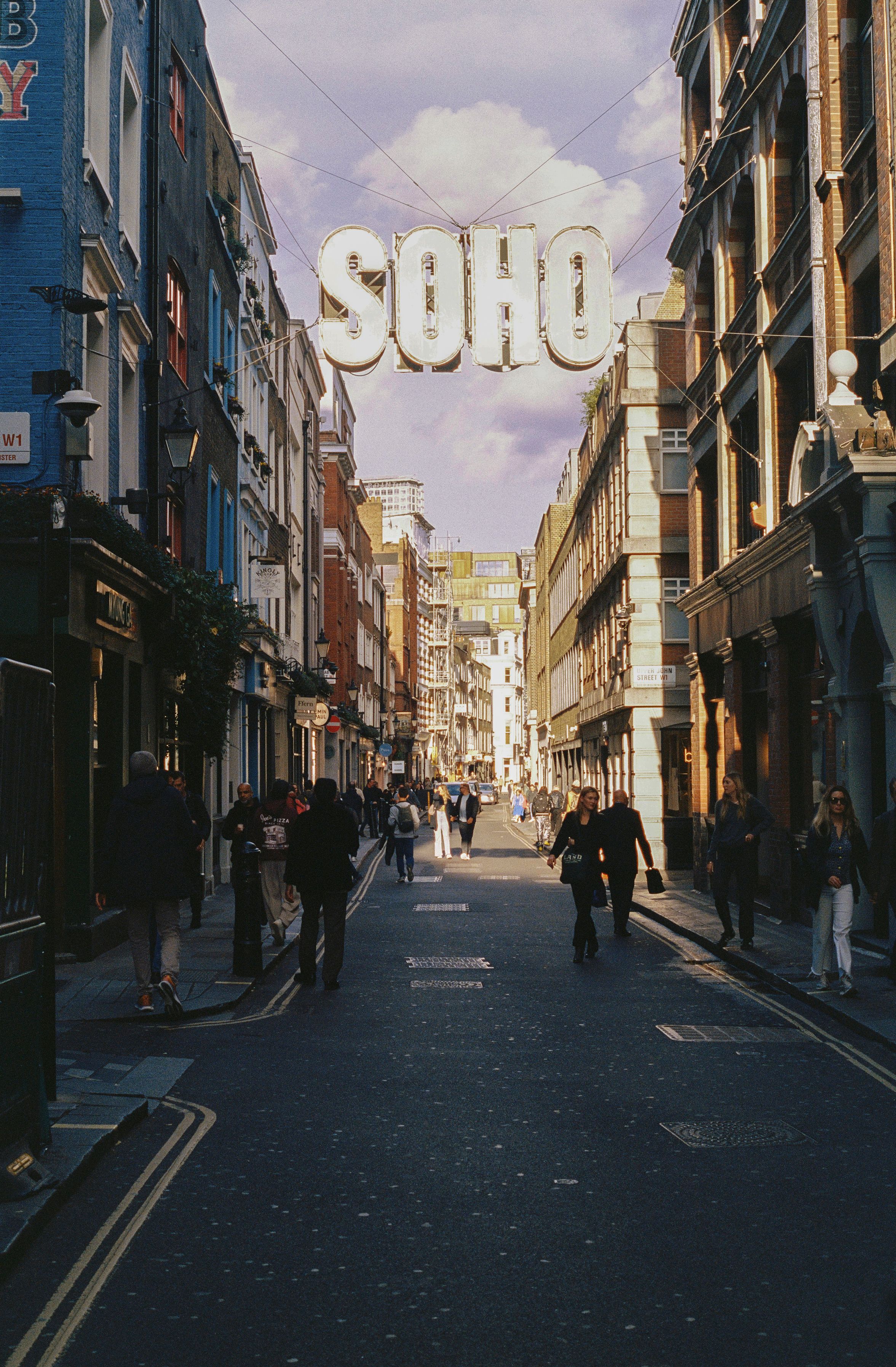
If you like going out without a rigid plan, Soho makes it easy. Restaurants, bars and the rest of the West End are on your doorstep — though quiet nights can be harder to find.
Best for
- Visitors who enjoy wandering and changing plans as the day develops.
- Travellers who want walking itself to be part of the London experience.
- People who expect restaurants, pubs, bars and cafés to shape the trip.
- Visitors who enjoy returning to a neighbourhood that remains lively into the evening.
What you might find frustrating
- Wanting genuinely peaceful evenings around the hotel.
- Needing somewhere that feels separate from crowds and visitor activity.
- Preferring a more residential version of everyday London.
- Finding constant stimulation tiring once the novelty of a short stay fades.
Orientation
Where it sits in your London day
Soho is a compact, intensely walkable West End neighbourhood where spontaneous exploration, food, nightlife and constant street activity matter more than calm or residential atmosphere.
- Transport
- Low for many central-London itineraries because much of the West End is naturally reachable on foot; wider journeys are served by several stations around Soho rather than one defining hub.
- Walking
- Walking is part of Soho’s appeal, not merely a way to get somewhere else: short distances, dense choice and frequent detours make the streets themselves part of the stay.
- Sleep
- Sleep risk is materially higher than in calmer central neighbourhoods. Late-night street activity and early servicing can matter, so the exact hotel street and room position deserve unusually close attention.
Who it suits best
Soho is at its best when you want the neighbourhood itself to keep giving you things to do. You can leave the hotel without much of a plan, walk for ten minutes and find somewhere for coffee, lunch, a drink, dinner or simply another street worth turning down. That density makes Soho unusually good for visitors who enjoy changing their mind as the day develops rather than treating the accommodation area as somewhere they only sleep.
It also suits people who want central London to feel immediate. Much of the West End is naturally walkable, but Soho’s real advantage isn’t just that other places are close. The area rewards the walking itself. A journey to dinner can become part of the evening; a gap between plans can be filled without another transport decision; coming back early doesn’t necessarily mean the day is over.
That makes Soho particularly strong for short, energetic stays built around food, bars, nightlife, theatre and spontaneous exploration. If the idea of stepping outside into activity sounds energising rather than exhausting, Soho is one of the clearest expressions of that version of London.
Why you might prefer somewhere else
The same qualities create Soho’s most predictable regrets. It’s a poor fit if you want your hotel area to act as a retreat from London. Streets can remain busy well into the evening, there’s relatively little sense of residential separation from the visitor economy, and the neighbourhood rarely gives you much psychological distance from the city around you.
That matters even if you enjoy Soho as a place to visit. Loving an evening here doesn’t automatically mean you’ll enjoy waking up here, returning here every afternoon or hearing the area continue around you after you have decided your own day is finished.
If calmer streets, more green space or a stronger sense of everyday neighbourhood life matter heavily, staying nearby and visiting Soho may work better than basing the whole trip here. The question isn’t whether Soho is exciting enough. It’s whether you want that intensity to be the background to every part of the stay.
Day-to-day rhythm
Soho has a fast rhythm, but not because visitors need a packed itinerary. In fact, it often works best when the itinerary is loose. Mornings can start relatively quietly by Soho standards, but activity builds quickly through lunch, afternoon shopping and café traffic, then changes character again as restaurants, pubs and bars take over in the evening.
The practical effect is that days tend to fragment into lots of small decisions. You may go out for breakfast, return later than expected because you kept walking, stop for a drink before dinner and then change venue because something else catches your attention. Visitors who enjoy that kind of improvisation can get a great deal from a very small geographic area. In Soho, the streets aren’t just the route between plans; they are part of the plan.
The other side is that Soho gives you fewer naturally quiet pauses. Even when you’re not actively sightseeing, there’s usually movement, noise, queues, deliveries, nightlife preparation or people passing through. For some visitors that continuity is the appeal. For others, it gradually turns a stimulating neighbourhood into an exhausting base.
Getting around
Soho’s strongest transport advantage is that you often need transport less than you expect. Covent Garden, Leicester Square, Oxford Street, Mayfair, Trafalgar Square and much of the wider West End are natural walks. Many journeys that look separate on the Tube map are simply different edges of the same central walking area.
For trips that spread further across London, you still have several useful stations around the neighbourhood rather than one single transport hub defining the stay. The exact station you use will often depend on which side of Soho your hotel is on and where you’re heading that day.
That makes Soho particularly efficient for itineraries concentrated in central London. If most of your plans are much further east, south or outside the centre, its walkability remains useful but the advantage becomes less decisive because repeated longer journeys start to matter more.
Walking and everyday convenience
Walking isn’t merely the easiest way to move around Soho; it’s part of why people enjoy staying here. The area is compact, streets change quickly, and the gap between one useful place and the next is often short enough that detours feel effortless. That makes ordinary time between major plans unusually easy to fill.
The convenience is strongest if your definition of convenience includes food, coffee, drinks and spontaneous choice. You’re rarely dependent on one particular restaurant or one carefully timed plan because alternatives are close by. That flexibility is especially valuable when you arrive back tired and still want dinner without crossing London again.
But convenience here comes with a trade-off. Soho is very good at giving you more options; it’s less good at giving you a simple, quiet routine. If your ideal morning is a calm walk, a slower local café and a clear sense of leaving the crowds behind, another central neighbourhood may feel easier despite being no less practical on paper.
Noise and sleep
Noise is one of the most important reasons to look beyond the word “Soho” and inspect the actual hotel street. A room above or close to a busy nightlife street can create a very different stay from one on a quieter edge of the neighbourhood. Soho’s intensity is real, but one street can feel very different from the next.
Late-night voices, people moving between venues and general street activity are the obvious risks. The less obvious part is that disturbance can continue after nightlife begins to fade: servicing, deliveries, refuse collection and street cleaning can make early mornings active too. A room that feels exciting at 10 p.m. may be less appealing several hours later.
That doesn’t mean light sleepers should automatically rule Soho out, but they should treat room position and street position as part of the neighbourhood decision rather than as minor hotel details. If sleep quality is one of your strongest priorities, Soho asks you to accept more uncertainty than calmer alternatives such as Bloomsbury or Marylebone & Fitzrovia.
Food, pubs and evenings
Evenings are where Soho most clearly justifies choosing it as a base. Restaurants, pubs, bars and late food aren’t simply amenities around the hotel; they are part of the neighbourhood’s identity. You can finish a formal plan elsewhere in London, return to Soho and still feel that the night has another stage available without needing to organise one.
That suits visitors who like nights to unfold organically. Dinner can lead to another drink, a planned venue can be replaced by something found on the way, and different parts of the group can make different choices without needing to travel far apart. The concentration of options reduces planning friction precisely when people are often least interested in planning.
It’s also the clearest reason not to stay here. If your preferred evening is dinner followed by a quiet walk and an early night, paying for Soho’s intensity may bring very little benefit while leaving you with most of its drawbacks. In that case, visiting for an evening and staying somewhere calmer is often the more coherent choice.
Tourist intensity
Soho isn’t a theme-park version of London, but neither is it an ordinary residential neighbourhood. It has a strong identity of its own and a long-established role in London’s entertainment life, yet much of the daily environment is shaped by people coming into the area to eat, drink, shop and go out.
That distinction matters because “authentic” isn’t the useful question. Soho can feel unmistakably London while still being crowded, visitor-heavy and entertainment-led. What matters is whether you want to live inside that activity for the duration of the trip or simply dip into it when the mood suits.
If you want a base where everyday local routines are more visible than the visitor economy, Marylebone & Fitzrovia or Bloomsbury will usually make more sense. If you want central London to feel energetic and socially active from the moment you step outside, Soho’s visitor intensity becomes part of the attraction rather than a flaw.
Longer-stay suitability
Soho can be excellent for a short stay because its strengths are immediate. You don’t need days to understand how to use the neighbourhood: walk out, explore, eat, drink, change plans and keep going. On a weekend or a few energetic nights, that compression of choice can make the trip feel fuller without requiring much travel.
Over a longer stay, the calculation becomes more personal. The things that initially feel exciting — crowds, constant decisions, busy streets and evening activity — are also the things you experience repeatedly when buying breakfast, returning tired or spending an unscheduled afternoon near the hotel. The question becomes whether the novelty settles into a rhythm you still enjoy.
Visitors who genuinely like high stimulation may continue to value Soho for a week or more. Those who mainly wanted access to Soho’s restaurants and nightlife may discover that they would rather visit it from a calmer base. Longer stays increase the value of breathing room, routine and enjoying the neighbourhood even when you’re doing nothing in particular.
Better alternatives
Covent Garden is the closest alternative when you want equally central West End convenience but prefer theatre, visible public activity and recognisable London to Soho’s more nightlife-led spontaneity.
Marylebone & Fitzrovia is stronger when you want excellent walking, restaurants and centrality but would rather return to a more balanced, everyday-feeling neighbourhood after the day’s plans.
Bloomsbury makes more sense when museums, culture, garden squares and calmer evenings matter more than constant stimulation.
Shoreditch & Spitalfields is the more natural alternative when the appeal is creativity, nightlife and discovery itself, but you would rather that energy come with a more distinctly East London identity than Soho’s classic central-London setting.