London neighbourhood guide
Shoreditch & Spitalfields
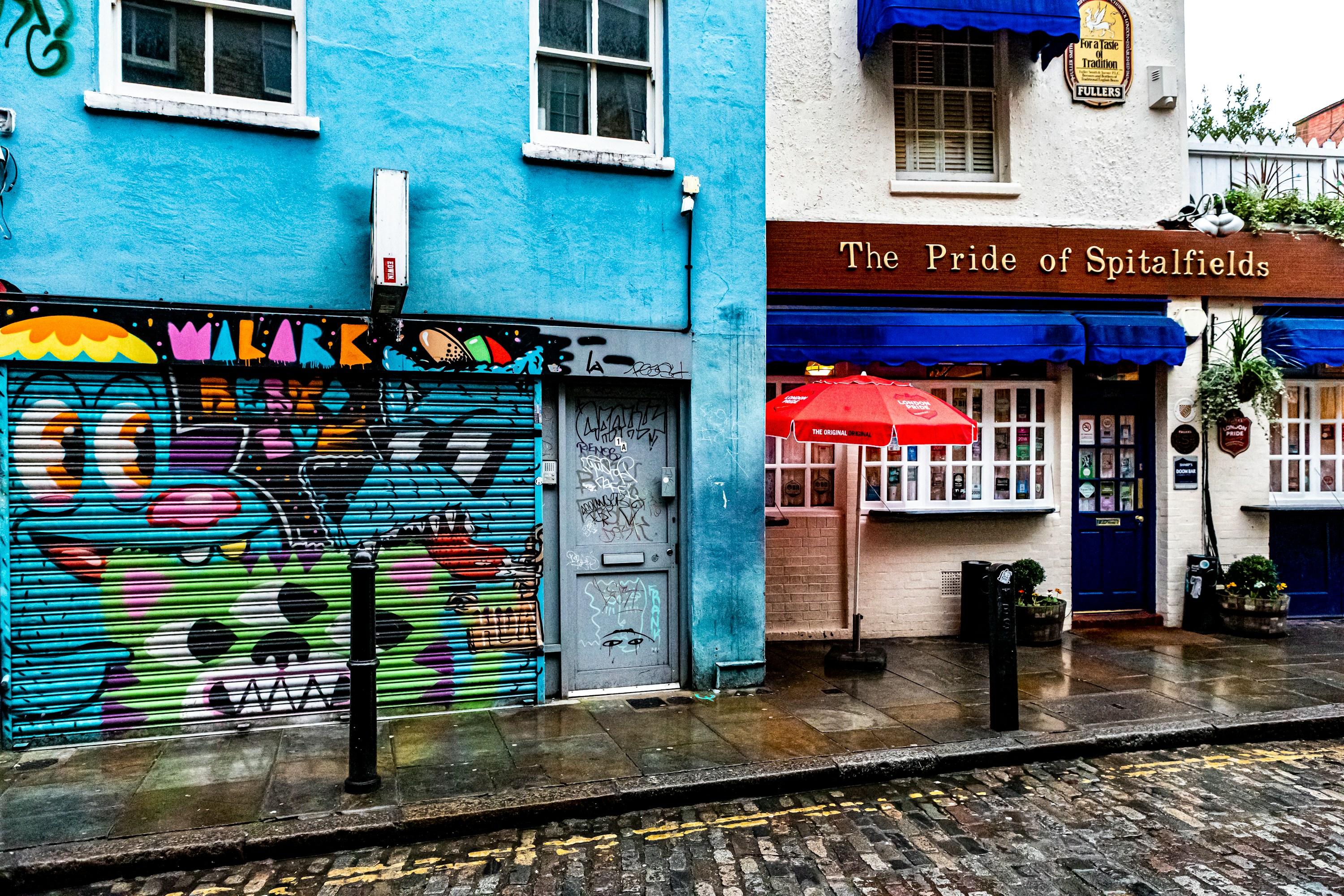
Shoreditch and Spitalfields are full of places to eat, independent shops and streets worth exploring. You’ll find plenty to do without a strict plan, but the feel — and the noise — changes considerably between streets.
Best for
- Want contemporary East London to be part of the trip rather than just a base for West End sightseeing.
- Enjoy independent cafés, restaurants, design, markets and street art.
- Prefer wandering and spontaneous discovery to rigid itinerary planning.
- Are comfortable with a neighbourhood that is visually mixed and constantly changing.
What you might find frustrating
- Need calm, polished or consistently residential surroundings.
- Book a hotel on a major road without checking traffic and late-night noise.
- Want classic landmarks and West End convenience to dominate the stay.
Orientation
Where it sits in your London day
Shoreditch & Spitalfields stretches from the City fringe through Spitalfields and Brick Lane into northern Shoreditch. The feel changes quickly: polished offices, historic market streets, creative warehouses and nightlife corridors can sit only minutes apart.
- Transport
- Strong East London access, especially via the Overground; wider central London remains easy to reach but the stay naturally pulls exploration eastward.
- Walking
- Highly walkable and discovery-led, with the strongest experience coming from side streets, markets, food and changing urban texture rather than landmark-to-landmark routes.
- Sleep
- Highly micro-location dependent; arterial roads and nightlife corridors can be noisy even when quieter creative side streets are close by.
Who it suits best
Shoreditch & Spitalfields works best when you want contemporary London to keep revealing itself around you rather than presenting a fixed set of headline sights. The pleasure is in wandering: finding an independent café, a new restaurant, a market, a piece of street art or a converted warehouse space because you turned down the right street rather than because it sat on a checklist.
That makes it especially strong for repeat visitors, food-focused trips and anyone who values design, independent businesses and contemporary East London culture more than ceremonial London. The defining trade-off is creativity in exchange for stability: the same continual reinvention that keeps the area interesting also means the streetscape, businesses and atmosphere can change sharply from one micro-location or visit to the next.
Why you might prefer somewhere else
Choose somewhere else if you want your neighbourhood to feel calm, polished or reassuringly consistent. Shoreditch & Spitalfields can be noisy, visually uneven and intensely commercial in places; Friday and Saturday nights can bring a much more nightlife-led atmosphere than weekday mornings suggest.
It’s also a weaker base if the trip is built around classic West End landmarks and you want to minimise deliberate cross-city journeys. You can reach central London easily, but staying here makes more sense when East London itself is part of what you want to explore rather than somewhere you leave every morning.
Day-to-day rhythm
Morning is often the calmest and most work-like version of the neighbourhood. Coffee shops open, creative businesses and offices fill, and the streets can feel productive rather than performative. Through the afternoon, markets, shops and restaurants add more visitor activity and wandering becomes the main pleasure.
Evenings move towards food, bars and socialising. By late evening — especially on Fridays and Saturdays — nightlife takes a much larger share of the street. The important question isn’t simply whether Shoreditch is lively, but whether you want a neighbourhood whose dominant population and purpose change noticeably through the week.
Getting around
The local experience is highly walkable, but one of the more distinctive transport advantages is the London Overground. It makes lateral exploration towards Hoxton, Haggerston, Dalston, Hackney and other parts of East London unusually natural instead of funnelling every journey towards the West End.
For classic central sightseeing, rail, Tube and bus connections are still strong. The trade-off is behavioural rather than logistical: choosing Shoreditch often nudges the holiday eastwards, because so many worthwhile walks, meals and neighbourhoods sit in that direction.
Walking and everyday convenience
Walking is one of the main reasons to stay here. The area rewards curiosity because independent cafés, restaurants, markets, design businesses and street art are distributed through the neighbourhood rather than concentrated in one formal attraction zone.
Do not confuse walkability with visual consistency. A polished warehouse conversion or photogenic side street can sit close to railway infrastructure, service yards, construction or a heavily trafficked road. Shoreditch works best when those contrasts feel like part of the urban experience rather than defects in an otherwise curated neighbourhood.
Noise and sleep
Exact hotel location matters a great deal. Great Eastern Street, Commercial Street and Old Street can bring heavy traffic, buses, freight vehicles, sirens and late-night activity, while a nearby side street may feel materially calmer.
Friday and Saturday nights deserve particular attention if sleep matters. Check the immediate street, what sits below or opposite the hotel and whether the property faces a nightlife corridor or arterial road. A Shoreditch postcode alone doesn’t tell you what the room will sound like at midnight.
Food, pubs and evenings
Food isn’t just one of the neighbourhood’s attractions; it helps the whole stay function. Strong cafés and restaurants are spread widely enough that an unplanned day can work without repeatedly stopping to research where to eat next. That supports the area’s broader appeal to visitors who prefer to wander and decide as they go.
Evenings are energetic and social, with restaurants, bars and creative venues doing more of the work than theatre or luxury hospitality. This is distinct from Camden’s music-and-alternative identity and from Soho’s concentrated West End entertainment: Shoreditch is more about contemporary food, design, entrepreneurial culture and the next place you discover.
Tourist intensity
Shoreditch & Spitalfields is internationally known, but it’s not simply a visitor district. Creative workers, office employees, local businesses and visitors overlap through the week, and the balance changes significantly at weekends when markets, leisure and nightlife draw a much larger outside population.
That makes the area capable of feeling both genuinely productive and heavily consumed as a destination. The creative identity is real, but so is its commercialisation; visitors who expect an untouched alternative enclave are likely to misunderstand what the neighbourhood has become.
Longer-stay suitability
Longer stays suit people who enjoy repeated discovery and don’t need the neighbourhood to remain visually or culturally fixed. New cafés, restaurants and shops appear while others disappear, and the western edge increasingly blends into the glass-and-office architecture of The City. Change isn’t a temporary inconvenience here; it’s part of the identity.
That also means a longer stay benefits from choosing the right micro-location. Northern Shoreditch gives more of the boutique creative lifestyle; Spitalfields is more market- and shopping-led; Brick Lane changes markedly from its curated northern stretches to the denser, more traditional East End character farther south; the western fringe feels increasingly corporate.
Better alternatives
Camden is the better alternative when music, alternative identity and expressive intensity dominate. King’s Cross & St Pancras is the better alternative when connectivity, regeneration and contemporary urban organisation dominate. London Bridge & Bermondsey is the better alternative when layered history, food culture and architectural complexity dominate. Soho is the better alternative when West End centrality, concentrated entertainment and immersive central energy dominate.