London neighbourhood guide
Covent Garden
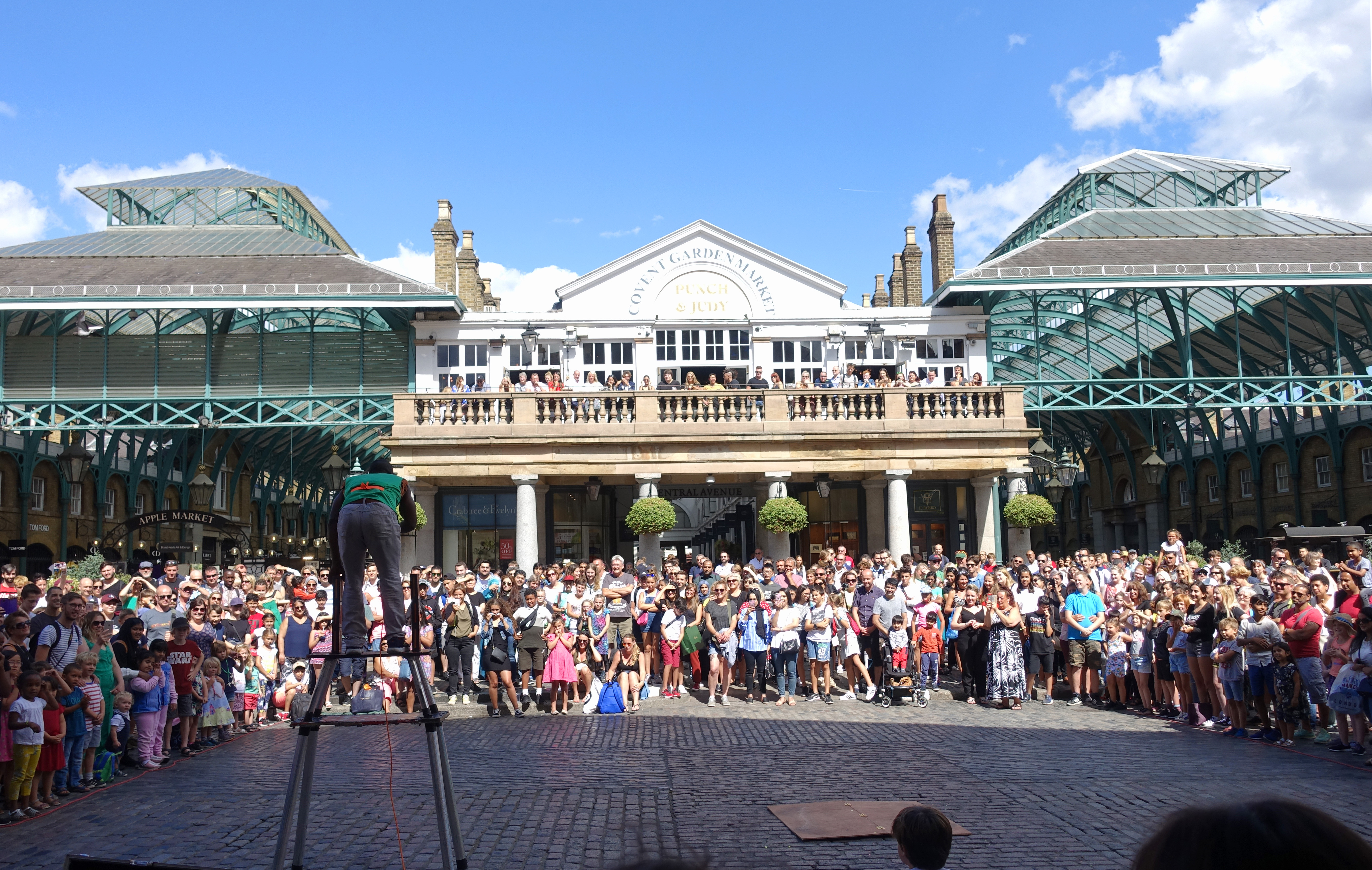
Covent Garden puts theatres, restaurants, shops and street performers right outside your hotel. It’s brilliant for walking, but don’t expect it to be quiet.

Best for
- First-time visitors who want central London to feel immediate and easy to understand.
- Short stays where walking and low planning effort matter heavily.
- Visitors who enjoy theatre, restaurants and active public spaces.
- Travellers who prefer visible choice and confidence over hidden discovery.
What you might find frustrating
- Wanting the hotel area to feel like a retreat from sightseeing.
- Preferring ordinary neighbourhood life to a strongly visitor-facing environment.
- Wanting quieter evenings and less pedestrian activity around the base.
- Finding more satisfaction in discovering London slowly than having it presented immediately.
Orientation
Where it sits in your London day
Covent Garden is a compact West End base where theatre, restaurants, shopping and public activity sit close together, making much of classic central London unusually easy to experience on foot.
- Transport
- Low for many West End itineraries because a large share of central plans connect naturally on foot; transport matters more once the trip repeatedly pulls away from the centre.
- Walking
- Excellent for compact sightseeing and easy plan changes, though busy pedestrian streets can make short distances feel slower when you are carrying luggage or trying to move quickly.
- Sleep
- Evening public activity can remain noticeable after sightseeing hours, so exact street and room position matter if you want the hotel to function as a quiet retreat.
Who it suits best
Covent Garden is strongest when you want London to feel immediately legible. Step outside and you’re already among theatres, restaurants, shops, performers, busy pedestrian streets and some of the West End’s most recognisable public spaces. You don’t need to work very hard to make the area feel like part of the trip.
That makes it particularly effective for first-time visitors and short stays where confidence matters. If you would rather spend your energy enjoying London than repeatedly deciding how to reach it, Covent Garden removes a surprising amount of friction. Many central plans connect naturally on foot, and the neighbourhood keeps giving you visible options when you have an hour to fill or an evening that has not been planned in detail.
It’s not automatically the right first-time base, though. Covent Garden works because it puts a highly visitor-facing version of central London around you. That’s a strength only if you actually want the trip to feel that way.
Why you might prefer somewhere else
The clearest reason to stay elsewhere is that Covent Garden rarely feels like a retreat from sightseeing. Public life is part of the neighbourhood’s identity: people arrive to eat, shop, watch performances, go to the theatre and spend time in the streets and Piazza. If you want to return to somewhere quieter and more residential at the end of the day, that visibility can start to feel like more London when you were hoping for less.
It’s also a weaker fit if discovering a place slowly is important to you. Much of Covent Garden announces itself. The appeal is often in having good options clearly in front of you rather than uncovering hidden ones. Visitors who enjoy the feeling of finding their own London may prefer Soho, Bloomsbury or another neighbourhood where the experience develops less publicly.
The predictable regret is therefore not that Covent Garden lacks things to do. It’s realising that you wanted more ordinary neighbourhood life, more calm or a stronger sense of discovery than this very confident visitor environment naturally provides.
Day-to-day rhythm
Covent Garden tends to make a London day feel easy to start. Breakfast, a walk, shopping, museums, theatres and restaurants can all sit within a compact area, while nearby parts of the West End are close enough that the boundaries between separate plans often disappear. You can leave the hotel with one fixed commitment and let much of the rest of the day assemble itself around that.
The experience begins the moment you leave your accommodation. Streets and public spaces are active enough that even the gaps between plans feel occupied: a performer in the Piazza, a queue outside somewhere popular, people arriving for matinees, shoppers moving through Seven Dials or diners beginning an early evening. The neighbourhood doesn’t rely on hidden discoveries to reward you; much of its appeal is already visible.
That constant availability is reassuring for some visitors and tiring for others. Covent Garden is very good at reducing uncertainty, but it gives you fewer moments when London recedes into the background. If you like a base that keeps the trip moving without much effort, that’s a major advantage. If you need quiet intervals to reset, it can become the opposite.
Getting around
Covent Garden’s practical strength is that a large part of the classic central-London itinerary becomes one connected walking area. Soho, Trafalgar Square, Leicester Square, the Strand, parts of Bloomsbury and much of the wider West End can often be reached without turning every journey into a Tube decision.
That matters most on shorter stays. When time is limited, the ability to combine several plans on foot can make a day feel simpler and more continuous. A museum visit, lunch, an afternoon wander and an evening performance don’t necessarily need to feel like four separate journeys.
The advantage becomes less decisive when your itinerary repeatedly pulls away from the West End. If much of the trip is centred further east, south or beyond central London, Covent Garden remains convenient but you’ll use transport more often and the premium you place on immediate West End walkability may matter less.
Walking and everyday convenience
The convenience here isn’t just about distance; it’s about how many useful choices are concentrated within a short walk. Plans are easy to alter. If one restaurant is full, another is nearby. If you finish something early, there’s usually somewhere obvious to walk next. If you return tired before an evening performance, you can often eat, rest and go back out without crossing London again.
That makes Covent Garden particularly forgiving for visitors who don’t want every hour organised in advance. The neighbourhood supports a loose itinerary because theatre, food, shopping and sightseeing sit close enough together for small changes not to unravel the day.
The cost of that ease is pedestrian density. Busy streets can make short distances feel slower than the map suggests, especially when you’re carrying luggage or trying to move quickly rather than browse. Covent Garden is easy to use, but not always calm to move through.
Noise and sleep
Covent Garden stays publicly active well beyond the sightseeing day. Theatre audiences, restaurants, bars and people moving through the West End can keep streets lively into the evening, so the atmosphere outside your hotel may remain part of the experience after you have personally finished with it.
The exact street and room still matter. A room facing a busy pedestrian route or active venue can create a different stay from one tucked away from the main flow, and it would be misleading to treat the whole neighbourhood as equally noisy. What is stable is the broader trade-off: this is a central visitor district, not an area chosen primarily for quiet evenings.
If your accommodation needs to function as a place to decompress from London, weigh that heavily. If you expect to stay out late, enjoy visible evening activity and mainly want the hotel to be a convenient base, the same environment may feel lively rather than intrusive.
Food, pubs and evenings
Evenings in Covent Garden are busy without being defined by nightlife alone. Theatre creates a distinctive rhythm: restaurants fill before performances, streets move with arriving audiences, and the area remains active again as shows finish and people look for drinks, dessert or somewhere to continue the evening.
That gives the neighbourhood a sense of occasion which suits visitors who want dinner and entertainment to connect naturally. You can build an evening around a performance, but you don’t have to. The concentration of restaurants, pubs and public activity means an unplanned evening can still feel purposeful without requiring a journey elsewhere.
This is also an important distinction from Soho. Soho is stronger when the appeal is improvisation, bars and discovery itself; Covent Garden is stronger when you prefer visible choices, theatre and a more recognisable West End evening. Both are lively, but they deliver that liveliness differently.
Tourist intensity
Covent Garden is genuinely part of London, but it’s also unmistakably organised around people coming to experience London. That’s not a contradiction. Its theatres, market buildings, Piazza, restaurants and public spaces have real identity; they simply operate in an environment where visitors are a major part of everyday life.
The useful question is therefore not whether Covent Garden is “authentic”. It’s whether you want your base to make London highly visible to you almost all the time. For some visitors, especially on a first trip, that produces exactly the sense of arrival they wanted. They step outside and immediately feel that the holiday has started again.
For others, the same quality creates distance from ordinary neighbourhood life. If you want cafés, streets and routines that feel less shaped by the visitor economy, Marylebone & Fitzrovia or Bloomsbury will usually offer a better balance.
Longer-stay suitability
Covent Garden’s strengths are front-loaded in a useful way. On a short trip, immediate access, easy walking and visible options can save time and reduce planning effort from the first morning. You understand how to use the neighbourhood almost immediately.
Over a longer stay, those benefits don’t disappear, but their relative value can change. Once you know the surrounding streets and no longer need constant reassurance that food, entertainment and famous parts of central London are close, you may start placing more value on routine, quieter evenings or a stronger sense of everyday neighbourhood life.
Some visitors will still love having the West End outside the door for a week or more. Others will realise that Covent Garden is somewhere they want frequent access to rather than somewhere they want to return to every day. Longer stays make that distinction more important because you experience the neighbourhood not only at its most exciting moments, but also when buying breakfast, coming back tired or doing nothing in particular.
Better alternatives
Soho is stronger when you want the West End to feel more spontaneous, food-and-bar-led and discovery-driven rather than visibly organised around public spectacle and theatre.
Marylebone & Fitzrovia is the better choice when you still want excellent central walking and restaurants but prefer a more balanced, everyday-feeling neighbourhood to return to.
Bloomsbury suits visitors who want culture, garden squares and calmer evenings to matter more than entertainment density and immediate visitor activity.
Westminster & St James’s is the more natural alternative when recognisable London means national landmarks, ceremonial spaces and historic grandeur rather than theatre, restaurants and compact West End activity.