London neighbourhood guide
London Bridge & Bermondsey
Stay around London Bridge and Bermondsey if you like exploring food markets, old warehouses and riverside streets. The feel changes a lot from one block to the next, so check the hotel location carefully.
Best for
- Enjoy discovering neighbourhoods through walking.
- Value exceptional food culture.
- Appreciate industrial architecture and urban history.
- Prefer layered discovery to polished uniformity.
What you might find frustrating
- A more immediately legible neighbourhood.
- Shorter and more obvious walking routes.
- A consistently polished atmosphere.
Orientation
Where it sits in your London day
London Bridge & Bermondsey is a depth-first base where markets, railway arches, historic streets, riverside routes and independent businesses reward curiosity. Its strength is layered discovery; the trade-off is a more fragmented, less immediately legible neighbourhood.
- Transport
- Excellent wider-London connections from London Bridge, but the station, viaducts and large roads can make local routes less direct than they appear.
- Walking
- Walking is highly rewarding because the area changes every few streets, but railway infrastructure means walkable does not always mean frictionless.
- Sleep
- Noise varies sharply by micro-location: station approaches, market streets and railway-arch venues can be busy, while deeper Bermondsey can feel much calmer.
London Bridge & Bermondsey is a depth-first place to stay. Its appeal isn’t that everything is easy to understand at first glance, but that the area keeps changing as you move through it: major transport, crowded food streets, brick viaducts, warehouse architecture, riverside paths and quieter independent neighbourhood life can all appear within the same walk.
The core trade-off is layered discovery in exchange for polished certainty. Stay here when you enjoy London revealing itself gradually and don’t need your neighbourhood to feel visually consistent, immediately legible or effortlessly organised.
Who it suits best
London Bridge & Bermondsey works particularly well for visitors who like exploring on foot, care about food, enjoy industrial and architectural history and would rather discover several different versions of London than remain inside one highly coherent atmosphere. It can suit repeat visitors especially well, but it’s not reserved for them: a first-time visitor who enjoys curiosity-led days can also get a great deal from staying here.
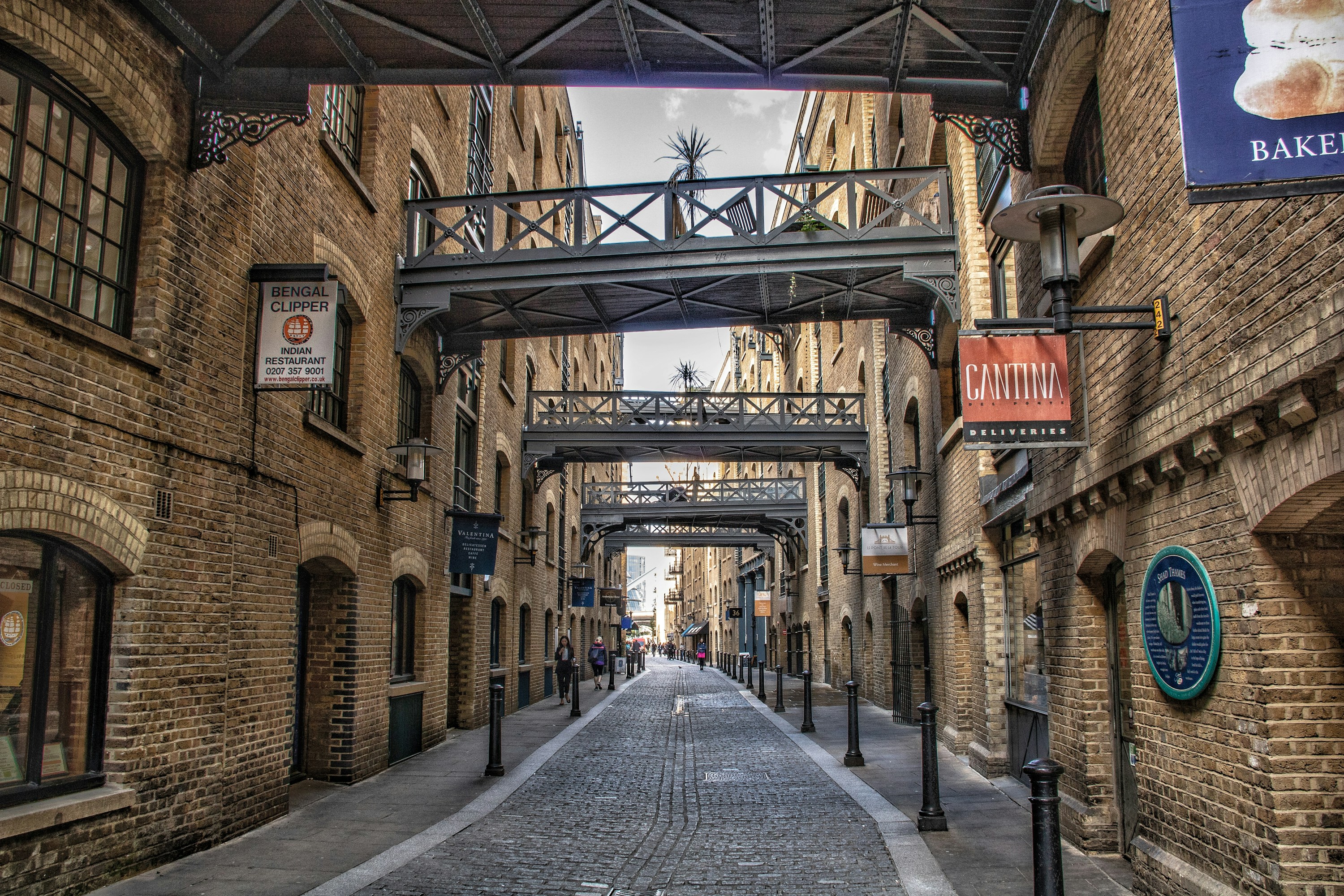
Its strongest case is for travellers who see a walk between plans as part of the trip. Borough Market may be the initial draw, but the more distinctive stay comes from what happens after you move beyond it — railway arches, side streets, Bermondsey Street, Shad Thames and riverside connections that reward detours rather than checklist sightseeing.
Why you might prefer somewhere else
Choose somewhere else if you want a base that’s immediately easy to read, consistently elegant or centred on London’s most famous sights. The neighbourhood’s richness comes with fragmentation: railway infrastructure interrupts routes, atmosphere changes quickly and a hotel carrying the “London Bridge” label can deliver a very different stay depending on which side of the tracks — and how deep into Bermondsey — it actually sits.
The predictable regret isn’t that there’s too little to do. It’s discovering that you wanted less effort from the neighbourhood itself: shorter and more obvious routes, a more uniform streetscape or a stronger sense that the main attractions were waiting directly outside the hotel.
Day-to-day rhythm
The neighbourhood doesn’t run at one speed. In the morning, commuters and business traffic concentrate around London Bridge Station while residential streets farther south can still feel comparatively calm. By afternoon, Borough Market and the surrounding food streets become much more intense, and the visitor-facing northern half is at its busiest.
Evening redistributes the energy. Restaurants, pubs and smaller hospitality venues matter more, especially around Bermondsey Street and the railway arches, while the station core begins to lose some of its daytime intensity. Later still, the area can feel surprisingly uneven: one street may be quiet while another remains busy around food, drink or weekend venues.
Getting around
London Bridge Station gives the area excellent wider-London connections, and many of the neighbourhood’s own attractions are best reached on foot. But high walking reward isn’t the same as low walking friction. The railway viaduct, station complex and major roads can make short-looking routes indirect, particularly when you’re crossing between the river-facing north and the more residential Bermondsey side.
Exact hotel position therefore matters more than the neighbourhood name suggests. A room close to London Bridge Station can make cross-London travel extremely easy; accommodation deeper into Bermondsey may offer more neighbourhood character but add a meaningful walk before every Tube or rail journey.
Walking and everyday convenience
Walking is the main way the neighbourhood reveals its depth. North of the railway you’re more likely to encounter the station, The Shard, offices, Borough Market and heavy visitor movement. South of it, Bermondsey Street, converted warehouses, independent businesses and more residential streets become increasingly important. Shad Thames adds another layer again, with Victorian warehouses, cobbles, iron bridges and a distinct industrial-riverside atmosphere.
That variety is the strength, but it means convenience depends on where you stay. The best-located hotels can combine excellent transport with easy food and riverside access; others trade some of that immediacy for quieter streets or a more local-feeling return at the end of the day.
Noise and sleep
Noise risk is highly local rather than uniform. London Bridge Station approaches bring trains, traffic, commuters and late movement; Borough Market and nearby hospitality streets can remain busy; railway-arch venues create their own weekend patterns. A room facing an internal courtyard or quieter side street can feel very different from one exposed to a main route despite sharing the same postcode.
If sleep matters strongly, check what lies immediately around and beneath the hotel rather than relying on the wider area label. Bermondsey can become calmer away from the station and visitor core, but that quieter location may come with a longer walk to transport.
Food, pubs and evenings
Food is one of the strongest reasons to stay here, but Borough Market is only the most visible part of the story. It offers extraordinary concentration and convenience, especially for a short visit, while smaller-scale food and drink activity continues farther south and east through independent restaurants, Maltby Street and the railway-arch hospitality scene.
Bermondsey Street supports a more neighbourhood-led evening of restaurants and pubs. The Beer Mile corridor is more specialised and particularly weekend-oriented, while the wider arches contain taprooms, distilleries and other independent venues. The result is an evening identity that’s social and food-led rather than theatre-led or dominated by large nightlife clubs.
Tourist intensity
Visitor intensity changes dramatically by location. Borough Market, The Shard approaches, Tower Bridge connections and London Bridge Station can feel extremely visitor-heavy, especially during the day. Bermondsey Street and southern residential streets tend to feel more mixed, while Shad Thames can be busy with walkers and photographers without functioning like a conventional tourist district.
The population mix also shifts through the week. Weekdays bring stronger commuting and business influence to the northern sections. At weekends, markets, riverside walking and the Beer Mile become more important, so leisure activity spreads through parts of the neighbourhood that can feel much more local during the working week.
Longer-stay suitability
Longer stays can make the area’s complexity more rewarding rather than less. Once Borough Market and the obvious river sights stop being the whole story, you have time to learn the routes, distinguish the different micro-areas and use food, walking and independent hospitality as part of everyday life.
The same trade-off remains, however. If repeated navigation around viaducts, busy approaches and changing environments begins to feel tiring, the neighbourhood’s depth can become friction. London Bridge & Bermondsey works best when discovery continues to feel like a benefit rather than another task.
Better alternatives
South Bank & Bankside is the stronger alternative when you want a more continuous riverside experience and easier landmark-to-landmark progression. The City works better when architectural history and London’s commercial evolution matter more than food-led neighbourhood discovery. Shoreditch & Spitalfields is the stronger fit when creativity, contemporary independent culture and reinvention dominate. Covent Garden is the clearer choice when you want iconic central London, theatre and immediate visitor confidence with much less effort required to understand your surroundings.